Existing vs As-Built Surveys – What’s the Difference?

128 City Rd, EC1V 2NX
+44 20 4615 4666
hello@linesurveying.uk
Laurel Hardwicke
February 20, 2026
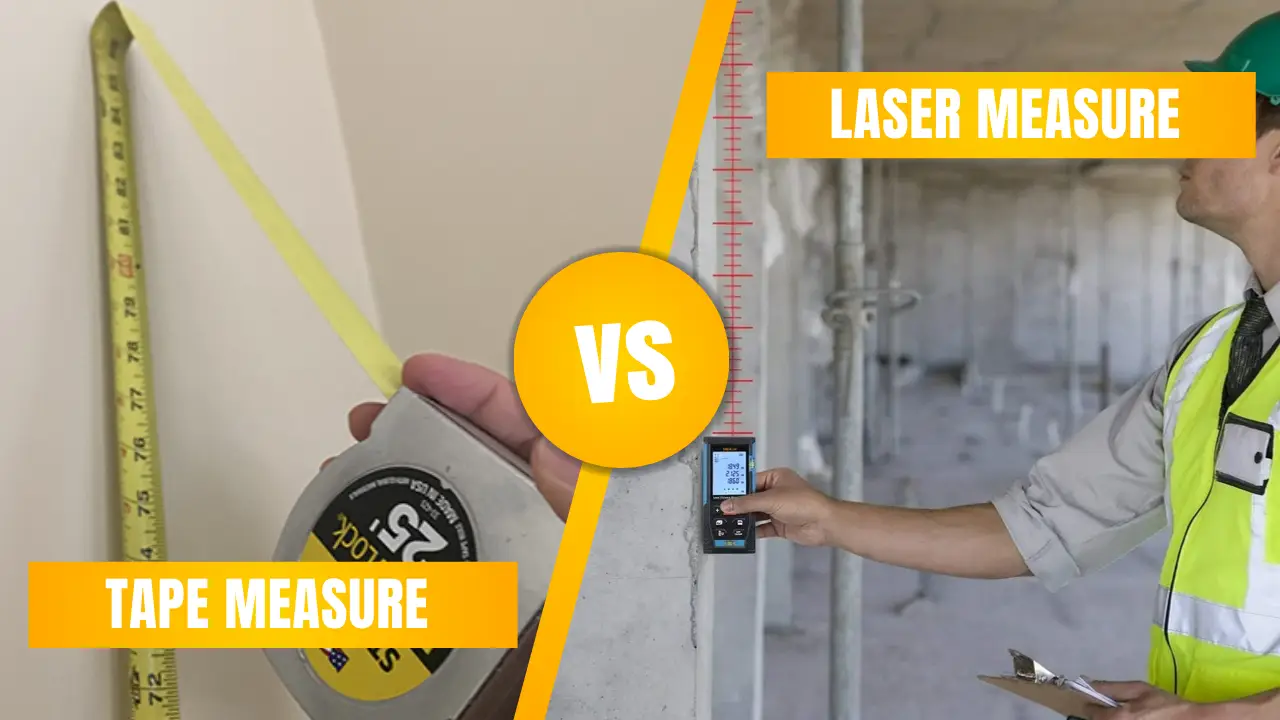
Accurate measurement is essential to the success of any construction project. However, the method used to collect that data can significantly affect design quality, coordination and overall reliability. When comparing laser scanning vs traditional tape measurement, the differences in accuracy and detail quickly become clear.
Traditional tape measurement has been used in construction for decades. While it remains suitable for simple layouts, modern projects often demand a higher level of precision. As buildings become more complex, the limitations of manual measurement are increasingly exposed.
At Line Surveying UK, we provide high precision laser scanning surveys to architects and construction teams across London and the UK.
Traditional tape measurement involves manually recording dimensions using tape measures or handheld distance tools. Surveyors measure wall lengths, floor dimensions and ceiling heights before producing drawings.
Although this method is straightforward, it depends heavily on selected measurement points. As a result, irregularities or subtle deviations can be missed. Furthermore, complex geometry is often simplified during the process.
For very small or straightforward projects, manual measurement may be sufficient. However, once layouts become irregular or structurally complex, reliability decreases.
Laser scanning uses advanced 3D equipment to capture millions of precise data points across a building or site. During the process, the scanner records accurate coordinate information in three dimensional space.
The result is a detailed point cloud dataset that represents real world conditions. Designers can then import this data into AutoCAD or Revit to produce accurate drawings and models.
Because the entire space is digitally recorded, the risk of missing critical information is significantly reduced.
Accuracy is one of the most important differences between the two methods.
Tape measurement records only chosen dimensions. Therefore, if a detail is overlooked, it simply does not appear in the drawings.
By contrast, laser scanning captures complete spatial geometry. Subtle wall deviations, floor slopes and structural irregularities are automatically recorded. This level of detail is particularly valuable in refurbishment and heritage projects.
Manual measurement requires surveyors to physically access each area and record dimensions individually. On larger or multi level sites, this can take considerable time.
Laser scanning, however, captures entire spaces quickly. In addition, because the data is stored digitally, designers can revisit the dataset without returning to site. Consequently, repeat visits are reduced and workflow efficiency improves.
Traditional tape measurement usually results in simplified 2D drawings. While suitable for basic layouts, these drawings may not reflect the full complexity of a building.
Laser scanning provides detailed 3D information instead. As a result, architects and engineers gain a clearer understanding of spatial relationships and structural conditions. This often prevents coordination issues later in the design process.
Manual measurement increases the likelihood of transcription mistakes, missed dimensions and rounding errors. Even small inaccuracies can lead to design revisions during construction.
Laser scanning reduces reliance on manual recording. Although professional processing remains essential, the captured dataset is consistent and comprehensive. Therefore, overall design risk decreases.
Despite its limitations, traditional measurement can still suit very small projects. For example:
Single room alterations
Basic internal layouts
Simple residential works
In these cases, the scale may not justify full laser scanning.
Laser scanning offers clear advantages for:
Refurbishment projects
Heritage buildings
Large commercial properties
Irregular or complex layouts
Projects requiring BIM integration
In these situations, comprehensive digital data significantly improves design accuracy and coordination.
At first glance, tape measurement may appear less expensive. However, redesign work, additional site visits and coordination clashes can increase overall project costs.
Laser scanning involves a higher initial investment. Nevertheless, it often reduces downstream risk and construction delays. When long term value is considered, scanning frequently proves more cost effective.
The best approach depends on the size, complexity and accuracy requirements of your project.
For simple layouts, manual measurement may be adequate. However, for structural alterations, refurbishment schemes or detailed 3D modelling, laser scanning provides clear advantages.
Choosing the correct method at the outset can prevent avoidable errors later.
Line Surveying UK delivers professional 3D laser scanning and measured building surveys across London and the UK.
Our accurate point cloud data integrates seamlessly into AutoCAD and Revit workflows, supporting architects, engineers and contractors.
By providing precise and reliable survey information, we help design teams reduce risk and improve project outcomes.
Yes. Laser scanning captures millions of coordinate points, significantly increasing overall positional accuracy.
Not always. For small and simple projects, manual measurement may still be suitable.
Yes. Residential refurbishments and extensions often benefit from accurate 3D survey data.
If you are unsure whether laser scanning or traditional measurement is right for your project, we can help.
Contact Line Surveying UK to discuss your requirements and receive tailored survey advice.
We use cookies to improve your experience on our site. By using our site, you consent to cookies.
Manage your cookie preferences below:
Essential cookies enable basic functions and are necessary for the proper function of the website.
These cookies are needed for adding comments on this website.
Statistics cookies collect information anonymously. This information helps us understand how visitors use our website.
Google Analytics is a powerful tool that tracks and analyzes website traffic for informed marketing decisions.
Service URL: policies.google.com (opens in a new window)
You can find more information in our Cookie Policy and .